A Brief Intro & Basics
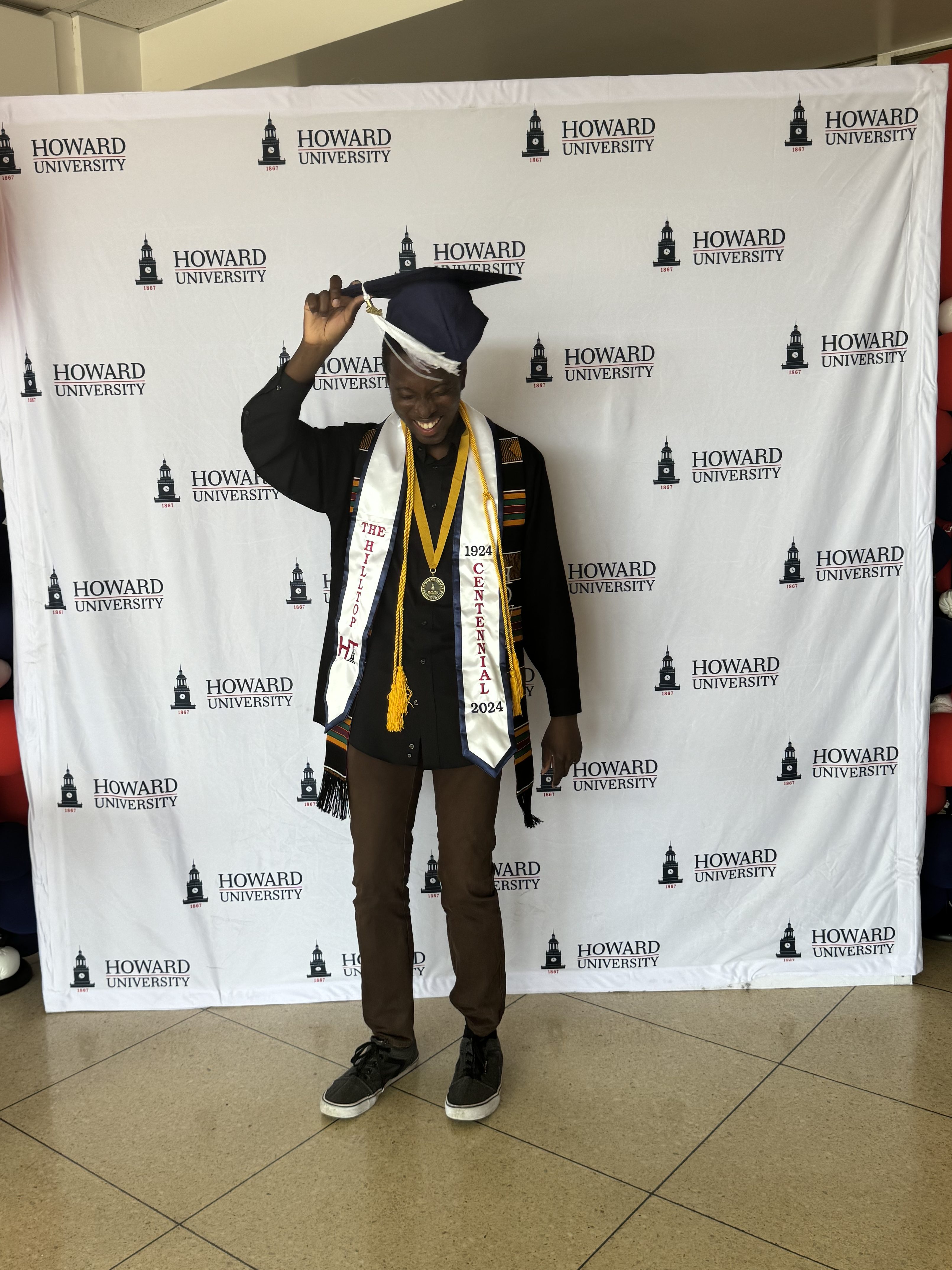
Hi, I’m Ife and I am a writer. In 2024, I earned a BA from Howard and completed applications to MBA programs at Harvard, Stanford, MIT, Columbia, and Upenn— some of the few schools that offer college seniors deferred admission routes to business school. I also applied to fully funded Master of Fine Arts (MFA) programs in creative writing and a master’s program in international economics and finance and Johns Hopkins SAIS, which I ended up enrolling in with a full tuition scholarship.
This page is a general overview on MBA admissions drawing from my own applications process, and while my own trajectory and career meandering may be different, I hope to be of help to students and professionals applying to MBA programs in the U.S in the near future, even if not in the Ivy League. Part of what spurred my decision to share these was the stressful run around I went through while applying, and how expensive MBA admission consultants were as a student (I paid $0 for those. It’s generally beneficial to have someone review your applications but that however doesn’t guarantee admissions).
Tip: Harvard, MIT, Columbia, the University of Virginia, Upenn and several other schools have fee waivers for students seeking deferred to MBA admissions. You can also get them at other schools by attending info sessions or emailing many times.
The MBA application journey may be multidimensional but different for everyone. In my case, I applied as a college senior demonstrating prospective interests in business journalism and nonprofit management. I majored in English, minored in Economics and had outstanding experiences in media and literature, alongside internships with Bank of America and PwC. There’s no industry or major requirement at most programs, but it usually helps to demonstrate quantitative aptitude and authentic interests, especially in essays and extracurriculars. For example: I had zero professional interest or experience in accounting, and I didn’t pretend to be interested along these lines. Also, writing was more than more an extracurricular for me, it was a professional arc.
Tip: When answering the “Why an MBA?” question, or “Why X or Z school?” try to display broad potentials for that program and yet very niche perspectives other applicants can’t easily replicate. ChatGPT cannot do that thorough introspection most times. Also, innovative enterprises and prior social impact make a big plus – have 2 or 3 of those to use, much of which should be sustained genuine interests.
What Exactly are Deferred MBA Admissions?
For clarity, “deferred MBA admissions” are an early admissions route for final year students completing an undergraduate or master’s degree who don’t have full-time work experience. As far as I know, there are thousands of MBA programs but not more than 20 schools in the U.S with this opportunity, and it’s best for students who know they want an MBA in 2-5 years and would love to get in early, albeit not enrolling in the program until years of full time experience as required by most business schools. The advantages range from networking opportunities to flexibility and progression, and so much more. The criteria is the same as regular MBA applications in the U.S, which is usually in 3 rounds, ranging from September to March, so the process is essentially the same, if not similar, but the deadlines are different.
Usually, for the deferred route, it closes April every year but applications often open up 4 months before that.
The requirements are usually a resume, essays, recommendation letters, and GMAT or GRE test scores – same for regular MBA applicants. While the Yale Silvers program has a different structure, with students starting MBAs right out of undergrad, others have a deferral window of 2-4 years, and sometimes 5, at MIT for instance. Most are highly selective, and so academic records, standardized test scores and outstanding leadership potential are often weighed heavily. Tip: Both the GRE and GMAT tests are valid for 5 years, and there’s generally no preference for either, so do the one you’re better at. Give yourself 4-6 months if you foresee a potential retake. You can even take it summer or a year ahead before the application opens.
I’d talk about standardized test prep later.
19 Business schools in the U.S offering “deferred MBA admissions”: Harvard, Stanford, MIT, Cornell, Columbia, University of Pennsylvania, Yale , University of California -Berkley, Carnegie Mellon, University of Virginia, Vanderbilt, Indiana,New York University, University of Chicago, Northwestern, Emory, Georgia Tech, Rice University, Georgetown.
MBA Application Tips
Regular applicants at most schools usually have 3 years of full time work experience or more, or outstanding entrepreneurship, and in many cases, both.
The biggest way to win in the application cycle is knowing schools individually, and being a great fit in their incoming class. This can be done through extensive research on the internet, attending admissions events, and conversations with prior applicants. Also knowing the specific field you want in the short term and long term after an MBA help tremendously, especially for essays and recommendation letters which should demonstrate your interests, expertise and avoid generic statements. Broadly speaking, here are some fields common after an MBA: private equity, finance, consulting, entrepreneurship, media, marketing, retail, healthcare and nonprofits. It’s always great to learn from people in the field you are interested, and to have models you can refer to – this is particularly helpful for fellowships at many schools.
Wondering where to start? Don’t know what schools to select?
There are several databases, guides and factors that may be of use. If you are interested in state schools with decent funding, places like Arizona State University, Ohio State University, Penn State University and the University of Pittsburgh may be a fit. If you are particularly interested in highly ranked schools, attend joint admissions events and check class profiles at the “magnificent 7” – Harvard, Stanford, Wharton, Columbia, Northwestern Kellogg, Chicago Booth, and MIT Sloan.
More School Lists:
https://en.wikipedia.org/wiki/List_of_business_schools_in_the_United_States
https://www.usnews.com/best-graduate-schools/top-business-schools/mba-rankings
Test Prep
After selecting what schools fit your goals, the next would be to get standardized tests out of the way. Test scores do matter, but they are not the sole criteria for admissions especially for applicants with high undergraduate GPAs, stellar leadership roles and professional experiences. Typically, there’s no minimum to apply, but look at the class profiles of your schools of interest and aim slightly higher. Neither the GRE nor GMAT is easy in my opinion, but the G.R.E verbal is particularly tricky while GMAT is generally more quant heavy. Also GMAT is only for business school, G.R.E can be used for other programs, so if you might consider a program in public policy or international development, G.R.E may be the better.
For more experienced applicants, applying to schools that waive the GRE or GMAT test requirements is a big bonus, especially with other time commitments. Usually years of experience and proof of prior quantitative experience gets the test off the yard at schools like Georgia Tech, University of Virginia, Washington University in St.Louis, and so much more. Always check to see if you meet the criteria ahead of time. The earlier you start the application process, the better. If you have a C.F.A, A.C.C.A or any advanced license, you usually can waive the test at many schools.
For the G.R.E, I highly recommend Gregmat. It’s less than $10 a month to subscribe and in my opinion, it beats all the test prep I used before it – Magoosh and Target Test Prep. If I had known it earlier, I wouldn’t have suffered. I spent a lot of time using a plethora of resources which is the biggest mistake many make out there. It’s best to stay with a consistent plan to cover the sections of the test adequately. For the verbal in particular, I suggest sticking to mostly the official exam body’s practice questions. Third party materials usually don’t efficiently replicate ETS tricks for the verbal section. The quant in old ETS practice books is easier than the real thing, so Magoosh and a bit of Target Test Prep may help with quant, but the very hard sections of both don’t match the test content, so save yourself the stress if you can. Kaplan and Manhattan are fair but I’d recommend Gregmat over it all, especially for the verbal. Also follow GRE 341 with Saad Amer, he had a 339 out 340 on the G.R.E years ago and has been of immense help to test takers.
For GMAT, GMAT Official Guide has its place and Target Test Prep seems to be a better option for GMAT than GRE. GMAT Ninja also seems to have helped several people, but I honestly recommend you give yourself more months than you think it will take to get a good score. Don’t be swayed by people who guarantee astronomic scores in two weeks – those are rare. Business schools also generally pay more attention to the quant score than the verbal score given the quantitative nature of the challenging classes in advanced business programs – econometrics, financial modeling, so if the verbal score are slightly below the median at the schools you wish to attend, move on.
Scholarships
How do you secure a scholarship? It depends on your background and the school’s funding. Many times, great schools have limited funding, so it generally pays to apply early and have high academic records and test scores in addition to outstanding leadership and potential contributions to the program. It’s also good to know donor scholarships for underrepresented communities: e.g scholarships for alums of HBCUs (historically black colleges and universities) or women. Some schools like Columbia and Harvard have a whole list of partner scholarships, so always keep in touch with your schools of interest well ahead of the application deadlines.
Some examples: The Forte Fellowship for women who are prospective MBA applicants at partner schools. The 7up scholarship: it annually sponsors an incoming Nigerian student at Harvard Business School. More of similar scholarships can be found here.
Usually, MBA scholarships are from corporate organizations, alumni or need based aid from the institution. At many schools, all applicants may be considered for the scholarships available, but it’s usually limited, so it’s helpful to leverage as much institutional and external support as possible. You can also fill reconsideration request forms sometimes to get additional aid.
Some schools not publicly announce scholarships so it’s always good to be proactive and ask students how they were funded or look up the financial aid page of the schools to see any corporate partners who offer scholarships. Some companies also sponsor employees who pursue MBA, so if that’s an option for you, it’s worth considering.
ProFellow – an excellent grad school source – also has a really good database of different graduate programs, and so you can check its list for MBA scholarships and funding here below:
https://www.profellow.com/fellowships/full-tuition-mba-scholarships-and-fellowships/
https://www.profellow.com/fellowships/fellowships-to-fund-your-mba-and-application-expenses/
Application Essays, Reviews and Interviews
Much of these are individual, but I am open to any feedback or questions on the application process.
 Ife Olatona
Leave a comment